

Moving to Northern California changed our lives. Monica and I are debt-free. We work about 20 hours a week. A $300K year feels calm.
But not every Kaiser nurse lives like this. In California, one Kaiser nurse can make up to $50 an hour more than another, just because of where they work. That gap means a very different life.
These rates are from October 2025, when this was first written. Pay changes every year, so check current rates in Map My Pay.
North vs. south: same company, two pay scales
In Northern California, Kaiser nurses start at around $85 an hour. Their union is the California Nurses Association (CNA). New grads on nights make a bit over $100 an hour.
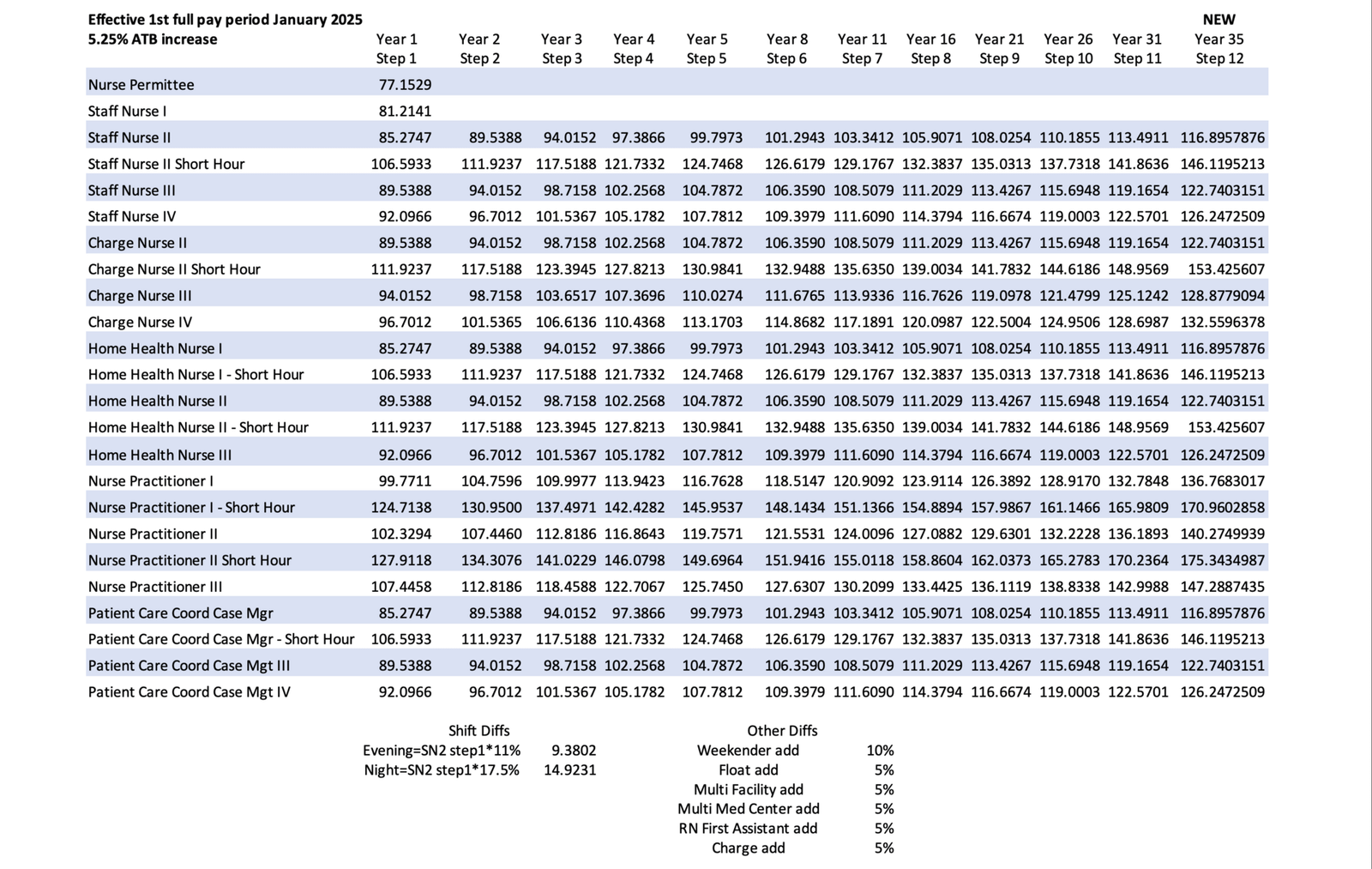
In Southern California, nurses doing the same job start near $53 an hour.

That is a $32 an hour gap. For a nurse working 40 hours a week, it adds up to about $66,000 a year.
Two nurses work for the same company. They wear the same scrubs and care for the same kind of patients. Their paychecks are far apart.
It is not just nurses. Pharmacists, physical therapists and PAs are in the same fight. Their union is UNAC/UHCP. They are short on staff, paid too little and worked too hard.
Why Southern California nurses went on strike
By mid-October 2025, about 31,000 Kaiser workers had walked off the job. They work in California and Hawaii. They want a raise, but they are also fighting for safe staffing and basic respect.
The strike runs five days. The reasons behind it built up over years.
Union president Charmaine Morales has been a Kaiser nurse for a long time. She said it best:
“This isn’t about the money.”
She said the strike is about respect and dignity, and about making sure patients get good care.
Morales said nurses don’t get paid while they strike. They are making that sacrifice because patient care has already slipped.
A nurse anesthetist in Redwood City said his team lost 25% of its staff in two years. They now run short, with longer wait times and heavier workloads. In his words, “Kaiser has taken advantage of our compassion.”
That is the heart of it. The people who kept this company going through COVID are burning out. Meanwhile, the top brass take home millions and ask the front line to do more with less.
Follow the money
Kaiser is far from broke.
- 2023 profit: $4.1 billion
- 2024 profit: nearly $13 billion
- 2024 revenue: $115.8 billion
- CEO pay: $15.6 million
- Investments: over $100 billion. That includes stakes in oil and gas, prisons, alcohol, casinos and gun makers
Kaiser says a 25% raise instead of 21.5% would cost too much. What they mean is they would rather guard their profits than pay the nurses who keep the lights on.
That 3.5% gap comes to about $300 million a year spread across 60,000 workers. Next to $17 billion in profit over two years, that is pocket change.
Inflation, ratios and what nurses face
Over the last four years, inflation has gone up 15.7%. Kaiser’s offer of 21.5% over four years sounds fair. But SoCal nurses would still start over $30 an hour lower than nurses up north.
NorCal nurses have ratios the CNA fought hard for. That means 1:4 in the ER, 1:3 in step-down and 1:1 for critical patients. Southern California nurses are stretched thinner. Many take six or more patients at once.
Kaiser calls that staffing flex. I call it a risk to patients and to nurses.
What is at stake
This strike is part of a bigger fight that started after COVID. All over the country, nurses deal with:
- Short staffing that never ends
- Too much paperwork on every shift
- Pay that has not kept up with inflation
- Bosses who get record bonuses
Nurses and other staff are sick of being told to do it for the patients. Their bosses spend billions on lots of things. Patient care is not one of them.
One labor expert said short strikes like this don’t cost the system much. They send a signal. The signal is that nurses are done carrying the load for free.
This is not NorCal vs. SoCal
The pay and ratios NorCal nurses have today were built on union power. Union contracts are why so many nurses up north break $100 an hour. The nurses on strike down south right now are holding the line for all of us.
This fight is not north against south. It is workers against a system that acts like we can be replaced. If you want to dig deeper, read how Kaiser NorCal and SoCal pay compare for new grads.
The takeaway
If you are a nurse thinking about your next move, don’t just chase the hourly rate. Look at the union, the ratios and the cost of living in that city. That is why I built Map My Pay, so you can see how far your paycheck goes.
You can’t outwork a broken system, but you can outsmart it. Later strikes showed the same story. See what 30,000 striking nurses are fighting for and where one union’s $52 million in dues went.
Your next move
See what you’d take home, then make the move
Map My Pay shows what nurses take home after taxes and rent at 465+ hospitals and in 21,000+ cities. It’s the app I co-founded so you can compare cities before you pack a single box.
The Nurses to Riches Accelerator is the plan Monica and I used to go from $37 an hour in New York to $143 an hour in California: license, city, hospital, and what to do with the money after.
Get the Map My Pay app See the Accelerator plans
Every Accelerator plan is a one-time payment with a 30-day money-back guarantee.

Written by Jason, RN. I went from $37 an hour in New York to $143 an hour in California and paid off $128K of debt in under a year. I share our numbers in the Nurses to Riches newsletter and on YouTube.